
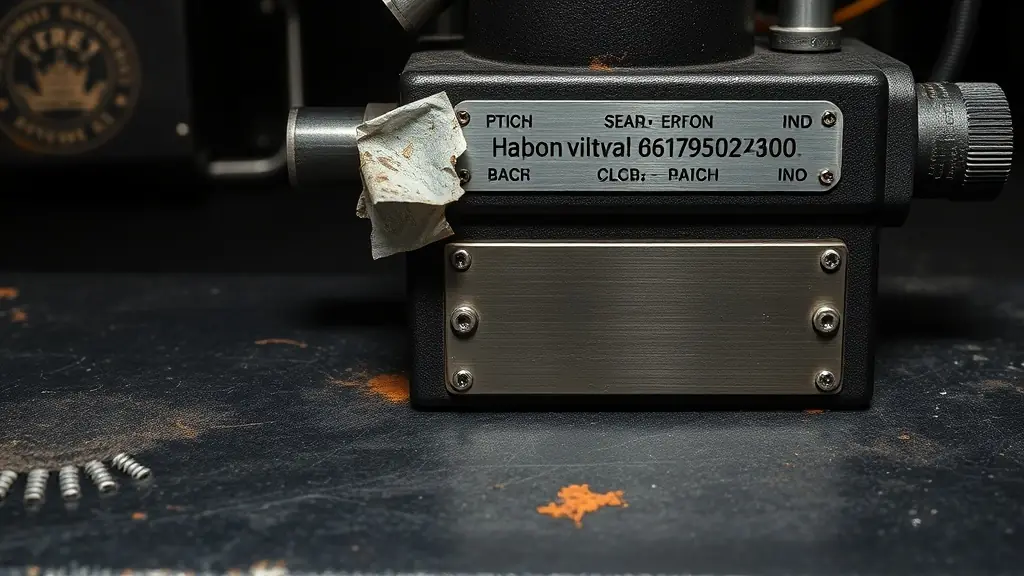
Every quote comparison starts the same way: a printed sticker costs less than an engraved phenolic label, line for line. That comparison stops being useful the moment you ask how long each one has to last. Engraved labels vs stickers is really a question about total cost of ownership, not sticker price, and once you count relabeling labor, failed inspections, and the time crews lose hunting for equipment identification that has gone missing, the answer changes for a lot of applications.
We engrave permanent identification for facilities, contractors, and OEMs, and we also tell customers plenty of times when a printed label or a label maker is the right call. The difference is not "engraved is always better." It is knowing which failure mode you are actually paying to avoid.
What a sticker costs beyond the sticker
A printed sticker or label-maker tape wins on unit price every time. What it does not include in that price is what happens after it is applied: UV exposure fades the print, adhesive lets go in heat or humidity, handling and cleaning wear the surface, and eventually someone has to notice the label is gone or unreadable, figure out what it used to say, reorder it, and reapply it. None of that shows up on the original invoice, but it is real cost, paid later, usually by someone other than whoever approved the original purchase.
On equipment that gets touched constantly, wiped down, handled, or exposed outdoors, that replacement cycle can repeat multiple times over the life of the asset. Each cycle is small on its own. Added up across a facility's worth of panels, breakers, and equipment, it becomes a recurring maintenance line item nobody budgeted for.
What a missing or wrong label actually costs
The bigger cost is not the relabeling labor, it is what happens while the label is missing. A technician troubleshooting a panel that should be marked and is not spends time confirming what they are looking at before they can safely work on it. During an inspection, missing or illegible equipment identification is a documented finding, and depending on the equipment, it can hold up a sign-off. On critical gear, an unreadable label is a safety problem, not just an inconvenience, because the person opening the enclosure needs to know what they are about to touch before they touch it.
We hear a version of this from facility managers regularly: a sticker that was fine when it was applied years ago is now unreadable, nobody remembers exactly what equipment it identified, and now it is an urgent reorder instead of a routine one. Our guide on engraved vs printed labels goes deeper into the specific failure modes we see most often on facility floors.
Why engraved lasts
An engraved phenolic label is not printed on top of the material, the identification is cut into it. There is no ink layer to fade, no laminate edge to lift, and no adhesive-only bond holding the words on. That is the mechanical reason engraved labels hold up through years of wipe-downs, sun, and handling that would degrade a printed label. For equipment that is going to be in service for years, not months, that difference compounds. You engrave it once and it is still legible when someone reads it a decade later.
Mounting also plays into total lifetime cost. A sticker only has one real option: adhesive. Engraved phenolic labels can be adhesive-backed, but they can also be drilled for screws or rivets, which matters on equipment that gets cleaned with solvents, sits outdoors, or takes physical abuse that would peel a sticker loose. If you are not sure which mount fits your equipment, our mounting options guide covers the tradeoffs.
Where a sticker is genuinely the right call
We are not going to tell you every label should be engraved, that is not honest and it is not how we run our own shop floor. A printed label or label-maker tape is the right choice when the marking is:
- Truly temporary, like a work-in-progress tag, a date-received sticker, or a batch marking that changes routinely.
- Indoors, low-handling, and low-consequence if it fades or needs reprinting in a year or two.
- Changing on a schedule you control, where you would be re-engraving anyway.
Engraved makes sense once the label is meant to identify something for the working life of the equipment: panel and disconnect identification, valve and pipe tags, nameplates, switchgear ID, asset tags on fixed equipment, anything an inspector will look for on a return visit. Our work in facility asset labeling is almost entirely this second category, permanent identification that has to survive years of plant conditions without anyone touching it again.
How to think about the comparison
The right question is not "which is cheaper," it is "how many times will I pay for this label before the equipment is retired." A sticker you replace several times over an asset's life, plus the labor to notice it is gone and reapply it, plus the risk of a failed inspection or a confused technician in between, adds up to a real cost even without knowing the exact price of either option. An engraved label you buy once and never touch again is usually the lower lifetime cost for anything permanent, even though it loses on the initial quote.
Common questions
Is engraved always more expensive up front than a printed sticker?
Per label, usually yes. The comparison changes once you account for how many times a sticker gets replaced over the same span of time and what it costs each time someone has to notice it, reorder it, and reapply it.
How long does an engraved phenolic label actually last?
Because the identification is engraved into the material rather than printed on the surface, it does not fade or wear off the way printed ink does. It is built to remain legible for the working life of the equipment it is mounted on.
Can I mix both, engraved for critical ID and stickers for everything else?
Yes, and most facilities do exactly that. Engraved makes sense for permanent, code-relevant, or safety-critical identification. Printed labels are fine for temporary or frequently changing marking.
What is the easiest way to get a real cost comparison for my facility?
Send us a list of what needs labeling and we will quote it. Compare that against what you are currently spending on relabeling and replacement over a year or two to see where engraving pays for itself.
Confirm substrate and exposure requirements against our material specifications and manufacturer references before ordering.