
Arc Flash Labels vs. Permanent Equipment ID
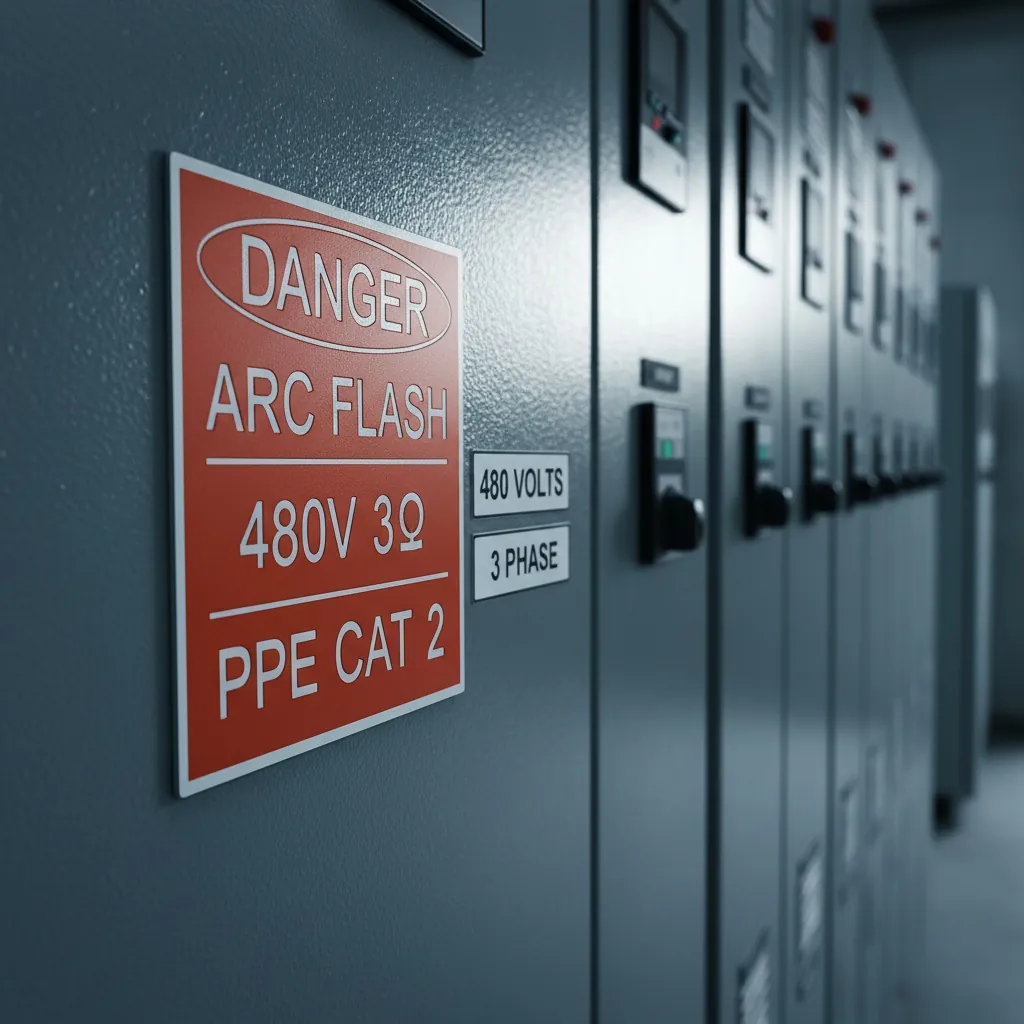
"Arc flash label" gets used for two very different things, and conflating them causes real problems — including ordering the wrong product for the wrong requirement. One is a site-specific data label that changes over time. The other is permanent equipment identification that must last the life of the gear. Here's how to tell them apart.
The site-specific arc flash label (NFPA 70E 130.5(H))
NFPA 70E requires that equipment likely to be examined, adjusted, serviced, or maintained while energized carry a field label with the nominal system voltage, the arc-flash boundary, and one — and only one — of: the calculated incident energy with its working distance, the minimum arc rating of clothing, or a site-specific PPE level. The values come from an arc flash study of your actual system, so they're specific to each piece of equipment. Since the 2015 edition, generic "Category 1–4" labels without calculated values are out, and the label must be reviewed and updated whenever the study changes — typically at least every five years or after any modification affecting incident energy. The 2024 edition added that these labels must be durable enough for their environment. Because the data changes and must be re-verified, this label is printed, not engraved.
The NEC warning label
Separately, NEC 110.16(A) requires a general arc-flash hazard warning on equipment like switchboards, panelboards, industrial control panels, meter enclosures, and motor control centers likely to be serviced energized. The 2023 code expanded 110.16(B) to require an arc flash label on service and feeder-supplied equipment rated 1,000A or more (down from 1,200A), marked with the date applied.
The permanent equipment-ID layer
Alongside those hazard labels sits everything that doesn't change: the equipment nameplate, panel and breaker identification, disconnect ID, feeder and voltage markings. This must stay legible and attached for the 20-to-30-year life of the gear, governed by the permanence expectation in NEC 110.21(B). Because it's fixed information, this is where engraved identification belongs — the text is cut into the material so it can't peel or fade.
How they work together
A well-labeled piece of equipment usually carries both: a printed, study-driven arc flash label that gets refreshed on schedule, and a permanent engraved nameplate and ID that never should. Trouble starts when one product is asked to do both jobs. Keep calculated arc-flash data on a label built to be updated, and permanent identification on a material built to last.
Custom Phenolic Labels engraves the permanent identification layer — equipment nameplates, panel and disconnect ID, and voltage markings — that lives alongside your arc flash program and outlasts the equipment's service life.
Separate replaceable arc-flash labels from permanent ID
Arc-flash study data can change, so the calculated hazard label usually remains a replaceable printed label. Permanent equipment identity is different: panel names, disconnect identification, feeder names, voltage markings, and fixed equipment labels are strong candidates for engraving.
For quote requests, send the arc-flash package only if it helps identify the equipment list. The engraved order should be based on the permanent names and markings that need to outlast the study cycle.
electrical panel labels for permanent IDphenolic labels for electrical equipmentswitchgear and medium-voltage nameplatesNEC 408.4 panel schedule labeling
Frequently asked questions
Should arc-flash data be engraved?
Calculated arc-flash data changes when the study changes, so it belongs on a replaceable printed label.
What identification should be engraved?
Fixed equipment names, panel identification, disconnect identification, feeder names, and voltage markings are appropriate for permanent engraving.
Plan the complete identification package
Use these connected guides and services to confirm the material, code reference, mounting method, and order details: Custom phenolic labels, Engraved nameplates and tags, Panel schedule labeling requirements, Engraved versus printed labels, NEC electrical identification guide, and Labels for electrical contractors.
Continue your research
Get a Fast Quote
Send your specs, label list, or panel schedule. Most quotes go out within one business day, call for same-day rush production.
Kennesaw, GA 30144
Mon–Thu 9:30–4:30 · Fri 9:30–2:30