
Engraved vs. Printed Labels: Which Lasts and Which Is Code-Compliant
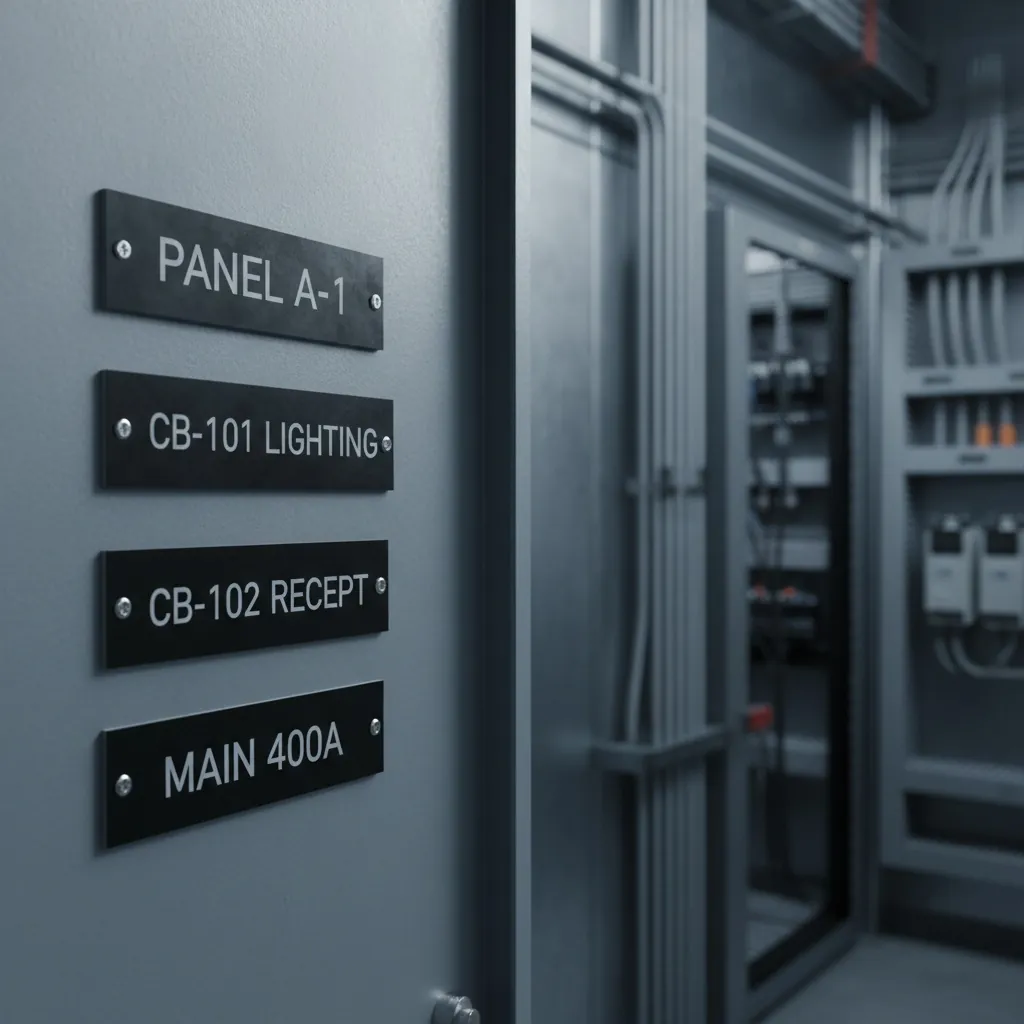
When identification has to survive years on equipment, the marking method matters as much as the message. Printed and engraved labels can look similar on day one, then diverge as sunlight, heat, cleaning, abrasion, and handling work on the label. The durable split is straightforward: print information that changes, engrave identification that should stay with the equipment.
How each is made
A printed label puts ink or a thermal image on the surface of a substrate — vinyl, polyester, paper — usually with adhesive backing. An engraved label cuts the text into a multi-layer laminate so a contrasting core shows through; the identification is part of the material, not a coating on top.
Permanence and code
NEC 110.21(B) requires field-applied hazard markings to be durable for their environment and not handwritten. Printed surfaces can fade, curl, or peel under UV, heat, chemicals, and abrasion; engraving can't rub off because the message is cut into the material. For identification meant to last the service life of equipment, engraving is the safer durable choice.
When printed is the right choice
Some labels are supposed to change. Site-specific arc-flash data labels are updated as the study changes; cable and asset labels in a data center follow a naming scheme that evolves; high-volume or barcoded labels are produced on demand. For anything that gets re-verified, serialized, barcoded, or reprinted, printing is correct and engraving may be counterproductive.
When engraved is the right choice
For fixed identification such as panel names, disconnect and equipment ID, nameplates, valve tags, legend plates, and control-panel labels, engraving delivers permanence and legibility that outlast surface printing. The information does not change often, so a material that keeps the message in the plate is the match.
The practical split
Data that changes → printed, built to be updated. Identification that's permanent → engraved, built to last. Most well-labeled equipment carries both, each doing the job it's suited for.
Custom Phenolic Labels engraves the permanent identification layer — the labels that shouldn't change and shouldn't fade — for electrical, industrial, and commercial work nationwide.
Engraved vs. printed labels comparison
| Use case | Engraved label | Printed label | Buyer rule |
|---|---|---|---|
| Permanent equipment ID | Text is cut into the material and cannot peel away as ink. | Can work only when the printed construction is rated for the environment. | Choose engraving for fixed names, panel IDs, disconnects, and nameplates. |
| Outdoor exposure | Use UV-stable engraving laminate and outdoor mounting. | Needs UV-rated face stock, adhesive, and overlaminate. | Do not use indoor material outside just because it looks correct on day one. |
| Changing information | Durable, but inefficient when values change regularly. | Easy to update and reprint. | Use printing for arc-flash values, barcodes, cable IDs, and temporary data. |
| Inspection-critical ID | Best when readability must survive cleaning, handling, and years of service. | Acceptable only if the spec and environment support it. | If shutdown or maintenance depends on it, quote the engraved version. |
When engraving is the buyer-safe choice
Printed labels work when the information changes often or the environment is mild. Engraving is the better fit for permanent equipment identity, panel names, disconnect labels, valve tags, asset labels, and control-panel legends that need to remain legible through cleaning, handling, sunlight, and routine maintenance.
If inspection, maintenance, or shutdown work depends on the label being readable years later, quote the engraved version and confirm material, mounting, and contrast before production.
engraved phenolic labelsengraved label mounting optionsNEC labeling requirements
Frequently asked questions
Are engraved labels always better than printed labels?
No. Engraved labels are better for fixed identification that should not change. Printed labels are better for variable data, barcodes, arc-flash study values, and temporary or frequently updated information.
Do printed labels meet NEC requirements?
They can when the label construction is durable for the environment and allowed by the project specification. For permanent equipment identity, engraving removes the surface-ink failure point.
When should I choose engraved labels outdoors?
Choose engraving for outdoor equipment names, disconnect ID, valve tags, control legends, and permanent placards where sunlight, cleaning, or handling can damage surface printing.
Plan the complete identification package
Use these connected guides and services to confirm the material, code reference, mounting method, and order details: Custom phenolic labels, Phenolic versus acrylic materials, Label color chart, Panel schedule labeling requirements, and Arc flash versus equipment identification.
Continue your research
Get a Fast Quote
Send your specs, label list, or panel schedule. Most quotes go out within one business day, call for same-day rush production.
Kennesaw, GA 30144
Mon–Thu 9:30–4:30 · Fri 9:30–2:30