
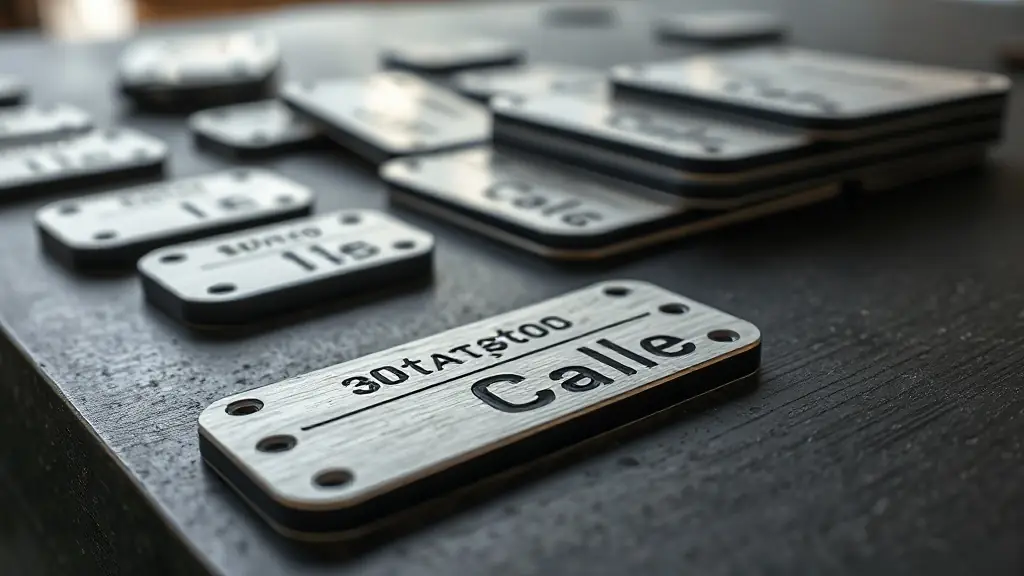
If you have spent time in electrical, HVAC, or industrial trades, you have already handled phenolic labels, even if nobody called them that on the job site. The people asking what are phenolic labels are usually staring at a panel schedule, a nameplate, or a valve tag and wondering what the plate in front of them is actually made of, and why it has survived years of grease, sunlight, and wipe-downs without fading. The short answer is that it is a layered engraving plastic, and the name changes depending on who trained you.
This guide covers the material itself, how the engraving process works, why phenolic outlasts printed alternatives, and where it shows up across industrial and commercial facilities. We will also cover the naming confusion, because phenolic, lamacoid, and traffolyte all describe close relatives of the same product line, and knowing the difference helps you order the right thing the first time.
What are phenolic labels, exactly
In everyday electrical and industrial ordering, a phenolic label usually means a rigid, multi-layer engraving laminate. CPL standard labels use modern engraving laminate, not true phenolic resin-based material. True thermoset phenolic is a separate substrate that must be confirmed when an engineering specification requires it. A colored cap layer, usually thin, sits on top of a contrasting core color. When we engrave the plate, a rotary or laser tool removes the cap layer in the shape of the text or graphic, exposing the core color underneath. Nothing is printed on the surface and nothing is glued down. The lettering is physically part of the material, cut into it rather than applied to it.
That construction is the whole reason the material holds up. A sticker or a printed tag only survives as long as the ink and adhesive do. An engraved marking survives as long as the plate itself, because there is no separate layer to peel, scratch off, or fade the way ink does.
Phenolic, lamacoid, and traffolyte: same family, different names
Lamacoid is a trade name that became generic in North American electrical work. Veteran electricians and panel shops ask for lamacoid tags out of habit. Spec writers and engineers, especially on drawings that follow international conventions, are more likely to write phenolic or traffolyte, the equivalent term common in UK and Commonwealth specifications. All three point to the same layered engraving stock, and a shop that engraves one can engrave the others. For the naming history in more detail, including why the terms diverged by region and trade, see our breakdown of how lamacoid, traffolyte, and phenolic became separate names for one material.
Where the confusion actually matters is in ordering. If a specification calls for lamacoid or phenolic, confirm the actual substrate with the designer and supplier. Trade names alone do not establish that two materials meet the same engineering requirement. Where you do need to pay attention is cap and core color, ply thickness, and finish, because those vary by application even within phenolic itself.
Phenolic vs. acrylic: a common mix-up
Modern acrylic engraving laminate is often the material sold under the industry name phenolic. It is available in indoor and outdoor-rated grades. True resin-based phenolic has different properties; heat, chemical, and UV performance must be checked against the actual manufacturer data sheet rather than inferred from the name. If you are choosing between the two for a specific application, our phenolic versus acrylic comparison walks through the tradeoffs in more detail.
Why the trades rely on it
- It is non-conductive, which matters on or near live electrical equipment.
- It is rigid and dimensionally stable, so it does not warp or curl the way thin printed materials can.
- It resists the oils, cleaning chemicals, and abrasion common in shop and plant environments.
- The engraved text stays legible for the working life of the equipment it is mounted on, not just the first few years.
- It is available in standard ANSI and OSHA safety color combinations, so a danger, caution, or notice plate reads correctly at a glance.
How we engrave it
Once we have your text, layout, and material spec, the plate is cut to size and engraved on rotary or laser equipment depending on the design and quantity. Rotary engraving physically routs the cap layer away with a fine bit, which is the traditional method for lamacoid and gives a crisp, slightly recessed letter. For jobs with fine detail, logos, or very small text, laser engraving can hold tighter tolerances. Either way, the process is mechanical or thermal removal of material, not printing, which is the detail that makes the marking permanent.
After engraving, holes, slots, or adhesive backing are added according to how the plate will be mounted. We can drill for screws, add pre-applied double-sided tape, or leave it plain for a customer-supplied mounting method.
Where phenolic labels show up
Once you know what to look for, engraved phenolic is everywhere in built environments:
- Panel schedules and breaker directories inside electrical panels.
- Disconnect switches and switchgear identification.
- Valve tags and pipe identification in mechanical rooms.
- Machine and equipment nameplates on industrial gear.
- Pushbutton and control station legend plates that label what each button or switch does.
The common thread is permanence under conditions that would degrade a printed label: heat near electrical gear, chemical exposure in mechanical rooms, or years of hands touching the same pushbutton station. Anywhere a marking has to outlast the equipment it identifies rather than the season it was installed, phenolic is the default material, not an upgrade.
Common questions
Is phenolic the same thing as lamacoid?
Yes. Lamacoid is a trade name for the same layered engraving plastic that is generically called phenolic. A shop that offers one offers both under whichever name you use.
Can phenolic labels be used outdoors?
Outdoor suitability depends on the actual engraving stock, color, and mounting method. Indoor stock should not be assumed suitable for outdoor exposure. If a label will sit in full sun long term, tell us and we can spec a UV-stable stock.
Does phenolic conduct electricity?
No. Phenolic laminate is non-conductive, which is one of the reasons it is the standard material for labels mounted on or near live electrical equipment.
How thick is a typical phenolic label?
Most panel and nameplate work uses standard two-ply or three-ply sheet in the range shops commonly stock. If your project has a specific thickness requirement, let us know and we will confirm what is available before we cut.
Can you match my existing panel labels?
In most cases, yes. Send us a photo or a sample and tell us the cap and core colors and mounting style, and we will match it as closely as the stock allows. Our custom phenolic label service covers one-off matches as well as full facility relabeling.
Confirm substrate and exposure requirements against our material specifications and manufacturer references before ordering.