
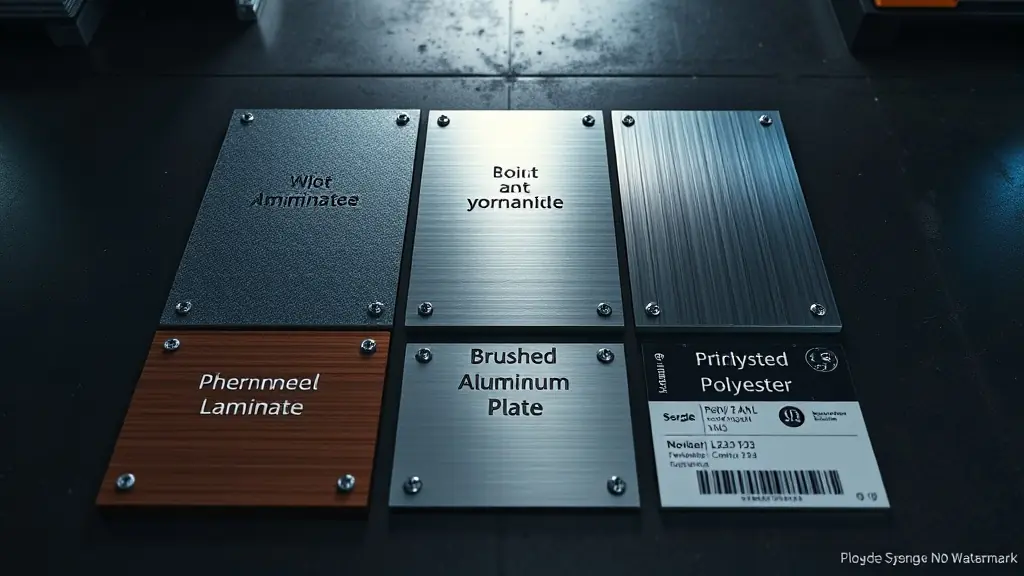
Which material should I use, phenolic, aluminum, or something printed, is one of the most common questions we get, and the honest answer is that each option has a place. This guide compares engraved phenolic against metal and printed polyester for the jobs they actually get used for: equipment ID, nameplates, panel labels, and asset tags, so you can match the material to the job instead of defaulting to whatever was used last time.
Engraved phenolic
Phenolic is a rigid, non-conductive, multi-layer plastic. Engraving removes the top cap layer to expose a contrasting core color, so the text is physically part of the material rather than printed on it. That construction is why it does not peel, rub off, or fade the way surface-applied markings do.
It is the standard choice for panel schedules, switchgear labels, machine nameplates, and anywhere a marking sits on or near electrical equipment, because it is non-conductive and holds up to typical shop and plant conditions: oils, cleaning chemicals, moderate heat, and abrasion. It also comes in standard ANSI and safety color combinations, so a danger or caution plate reads correctly without extra explanation.
Where phenolic is not the right call: sustained extreme heat well beyond its rated range, or environments where a metal tag's extra mechanical toughness is genuinely needed.
Metal: aluminum and stainless steel
Metal nameplates, whether engraved, etched, or stamped aluminum, or a more corrosion-resistant stainless option, are among the most physically durable choices available. They tolerate very high temperatures and heavy mechanical abuse, dragging, impact, constant handling, better than any plastic laminate. That makes metal the right call for engine and equipment data plates, foundry and high-heat process equipment, and outdoor asset tags exposed to serious weather over many years.
The tradeoff is conductivity. Metal conducts electricity, which is a real consideration for anything mounted on or near energized equipment, and it is one of the main reasons phenolic, not metal, is the default in electrical panels and switchgear. Metal also generally costs more than phenolic for comparable label sizes, and it is heavier, which matters for labels mounted on lightweight enclosures or with adhesive rather than fasteners.
Printed polyester
Printed polyester labels are thin, flexible, and inexpensive to produce in volume, which makes them a reasonable choice for temporary marking, inventory tags with barcodes, or low-stress identification that is not expected to last the life of the equipment. They can also carry more color and graphic detail than an engraved plate, since the image is printed rather than cut from two-tone stock.
The tradeoff is durability. The marking is a printed or laminated surface layer, not a physical part of the material, so it is subject to the same failure modes as any sticker: scuffing, UV fading, and edge peeling, especially with repeated handling, washdown, or outdoor exposure. For a closer look at why that construction difference matters over years of service rather than months, see our engraved versus printed labels comparison.
Side-by-side, the practical version
- Cost: Printed polyester is generally cheapest per unit, especially at volume. Phenolic is mid-range. Metal costs the most.
- Durability: Metal is the most physically tough. Phenolic is highly durable for typical shop and plant conditions. Printed polyester is the least durable of the three for permanent use.
- Conductivity: Phenolic and printed polyester are non-conductive. Metal is conductive, which matters near live electrical equipment.
- Legibility over time: Engraved phenolic and metal both keep their marking because it is cut into the material. Printed polyester's legibility depends on how well the print and laminate hold up.
- Weight and mounting: Phenolic and printed polyester are light and mount easily with adhesive or small fasteners. Metal is heavier and often needs mechanical fasteners.
A quick rule of thumb
- Permanent equipment ID on or near electrical gear: engraved phenolic.
- Extreme heat, heavy mechanical abuse, or decades-long outdoor exposure: metal.
- High-volume, short-life, or barcode-heavy marking: printed polyester.
In practice, most facility asset labeling programs end up using more than one of these materials across the same site, phenolic in the electrical room, metal on outdoor equipment, polyester on moveable inventory, because the job varies by location, not just by budget. If you are also weighing phenolic against acrylic rather than metal or polyester, our phenolic versus acrylic comparison covers that narrower decision.
Common questions
Can phenolic labels be mounted on metal enclosures?
Yes. Phenolic labels mount to metal panels and enclosures with adhesive backing or screws just as they would to any other surface, and the non-conductive plastic body does not create a grounding or contact concern with the enclosure.
Is aluminum always more durable than phenolic?
For extreme heat or heavy mechanical abuse, yes. For the everyday conditions of a typical electrical room or plant floor, phenolic performs the same essential job at lower cost and without the conductivity tradeoff.
Why not just use printed labels everywhere and save money?
You can for short-life or low-stakes marking. For anything that needs to remain accurate and legible for the working life of the equipment, especially where a missing or illegible label is a compliance issue, the lower upfront cost of printed polyester usually gets spent again on reprinting and replacement within a few years.
Do you engrave metal nameplates as well as phenolic?
Our core specialty is engraved phenolic and similar laminates. If your project needs a metal option, tell us the application and we can advise on the right approach.
Which material is easiest to update if information changes?
None of the three are field-editable once made, since the marking is either engraved or printed permanently. Phenolic and metal replacement plates are straightforward to reorder from the original file; keeping your label data on file with us makes reorders and updates fast regardless of material.
Confirm substrate and exposure requirements against our material specifications and manufacturer references before ordering.