
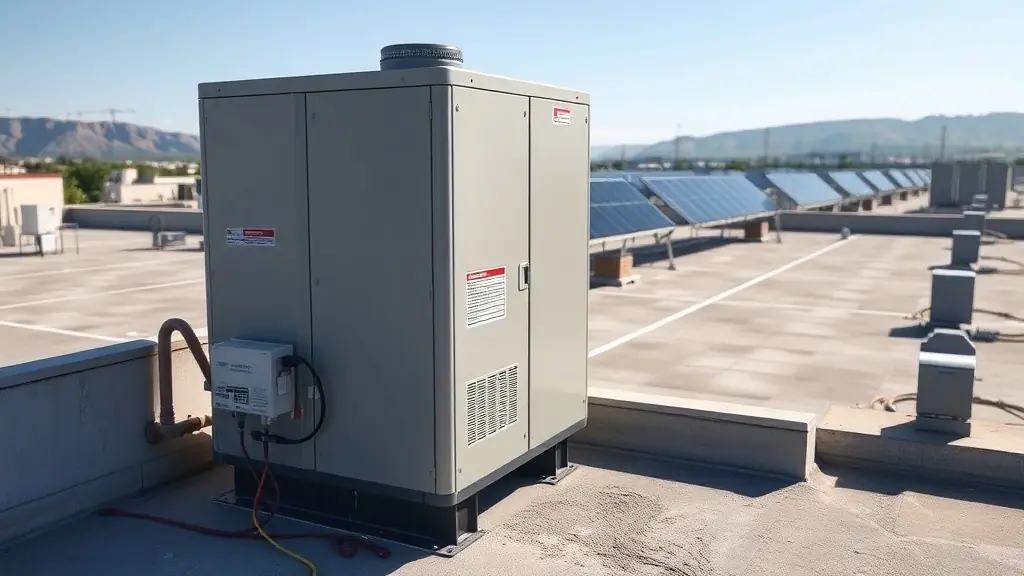
Every solar installer learns this the hard way at least once: the array is wired correctly, the disconnects work, and the job still fails inspection because a placard is missing or the color is wrong. Solar PV label requirements fall under NEC Article 690, with Article 705 covering the interconnection side once the system ties into the utility service. Inspectors check these placards closely because they are safety information for firefighters and utility workers who may be looking at the system for the first time, often in an emergency.
We have engraved PV placard sets for installers across the country, and the questions we get are almost always the same: what has to be labeled, what has to be red, and what material actually survives on a roof or a ground mount for the life of the system. Here is a practical rundown, with one caveat up front: the authority having jurisdiction (AHJ) and the NEC edition your jurisdiction has adopted are what ultimately govern any given job. Article 690 has been revised across code cycles, so confirm the applicable edition with your inspector or electrical contractor before you finalize a label set.
What a typical PV system needs labeled
The exact list depends on system size, whether it is grid-tied or includes storage, and how many disconnects and combiners are in the string. Across the installations we support, the recurring marking categories are:
- DC conductor marking at the array, combiner boxes, and along exposed raceway, identifying photovoltaic power source conductors.
- Disconnect marking at each PV disconnecting means, identifying what it disconnects and its function.
- Maximum voltage and current ratings posted at disconnects and other points the code requires, based on your as-built calculations.
- Warning marking at the point of interconnection with the utility service, so anyone working on the service equipment knows a second power source feeds it.
- Rapid shutdown labeling at the service disconnect and other locations the code specifies, in the standard warning format.
- A directory or placard identifying the location of all power sources on the premises, common once a system includes storage or multiple sources.
None of this is exotic. It is the same category of durable, code-driven identification we produce across renewable energy installations generally, not just rooftop solar. If you are unsure which markings apply to your specific system, our NEC compliance guide walks through the broader labeling framework these PV-specific rules sit inside.
Rapid shutdown placards, and why the color matters
Rapid shutdown labeling is the placard most installers ask about by name. The code calls for a specific warning format, typically a red background with reflective lettering, sized and worded a particular way, placed where first responders will see it before they touch anything. This is not a place to improvise the color combination. An inspector who sees a placard that does not match the required format will flag it even if the wording is otherwise correct, because the format itself is part of what makes the warning recognizable to someone working from memory in an emergency.
We keep the standard red and white combination, along with the other color formats PV work calls for, in stock specifically so a rapid shutdown placard is not the reason a job stalls at final inspection.
Why engraved placards outlast a decal kit
A lot of PV label kits sold online are printed vinyl decals, sometimes with a laminate layer over the ink. They look fine on day one. The problem is where they live: full sun, temperature swings between a hot rooftop and a cold night, wind, and years of UV exposure before anyone touches the array again. Printed ink fades. Laminate edges lift. A decal that has gone chalky or peeled at the corner after a few seasons on a roof is a common finding on re-inspections and service calls, and a faded rapid shutdown placard defeats the purpose of having one in the first place.
Engraved phenolic labels have characters cut into the stock. For an outdoor PV installation, specify the exposure, required material grade, color combination, and mounting method with your approved placard schedule. Engraving alone does not establish UV, chemical, or temperature suitability, or guarantee legibility for the life of the array. Confirm the applicable manufacturer documentation for the actual stock and attachment before approval.
Ordering your PV placard set
The fastest way to get an accurate quote is to send us your PV plan set, the one-line diagram, or the equipment list your electrical contractor already produced for permitting. That document already has the voltage, current, and disconnect information the labels need to reflect. We match the placard set to your plans, in the color formats and sizes the code calls for, sized to fit your disconnects and combiner boxes, and ready to mount when the crew is on site. For installers running multiple projects, we can also standardize a placard template across jobs so every site gets a consistent, code-correct set without re-specifying it each time.
Our solar PV labeling work covers everything from a single residential rooftop disconnect to placard sets for commercial ground-mount arrays with multiple combiners and disconnects.
Common questions
Does every PV system need a rapid shutdown placard?
Most grid-tied systems do, but the specific trigger conditions and placement requirements depend on the NEC edition your AHJ has adopted and the system configuration. Confirm with your inspector or electrical contractor before finalizing the label set.
Can I use a printed label for rapid shutdown placards?
Many jurisdictions accept printed labels that meet the format and durability requirements at time of installation. The tradeoff is longevity: printed labels are more prone to fading and lifting outdoors over the years the placard needs to remain legible, which is why we recommend engraved material for anything expected to stay in service long term.
What information do you need to quote a PV placard set?
Your PV plan set or one-line diagram, the number and type of disconnects, and any specific wording your AHJ or engineer has required. If you already have a previous job's placard set, that works too as a starting template.
Do you cover interconnection labeling under NEC 705, not just Article 690?
Yes. Point-of-interconnection warning marking and multiple power source directories are things we produce regularly alongside the Article 690 placard set.
Confirm the adopted code and project requirements using NFPA National Electrical Code resources and your authority having jurisdiction.
Confirm substrate and exposure requirements against our material specifications and manufacturer references before ordering.